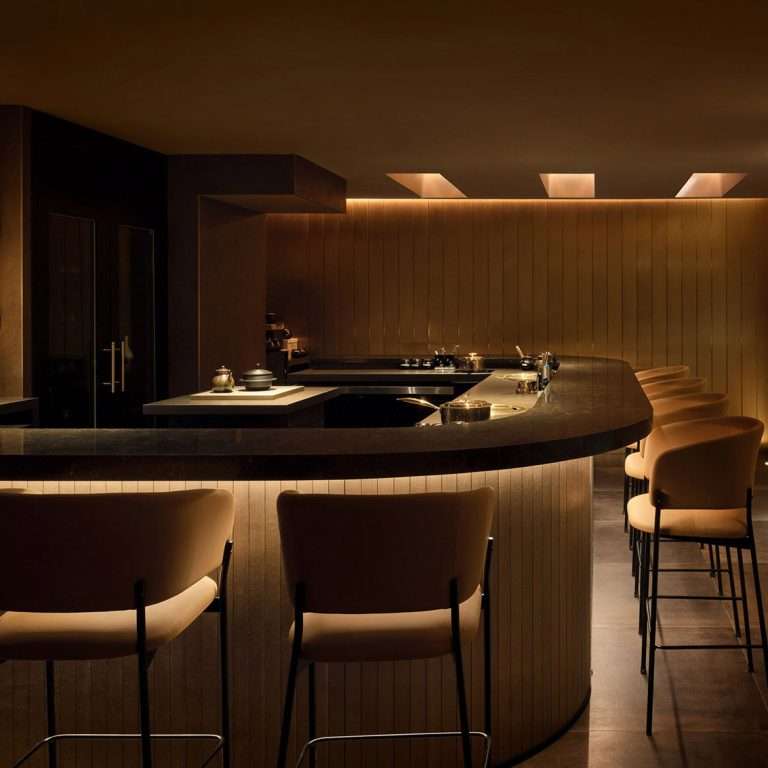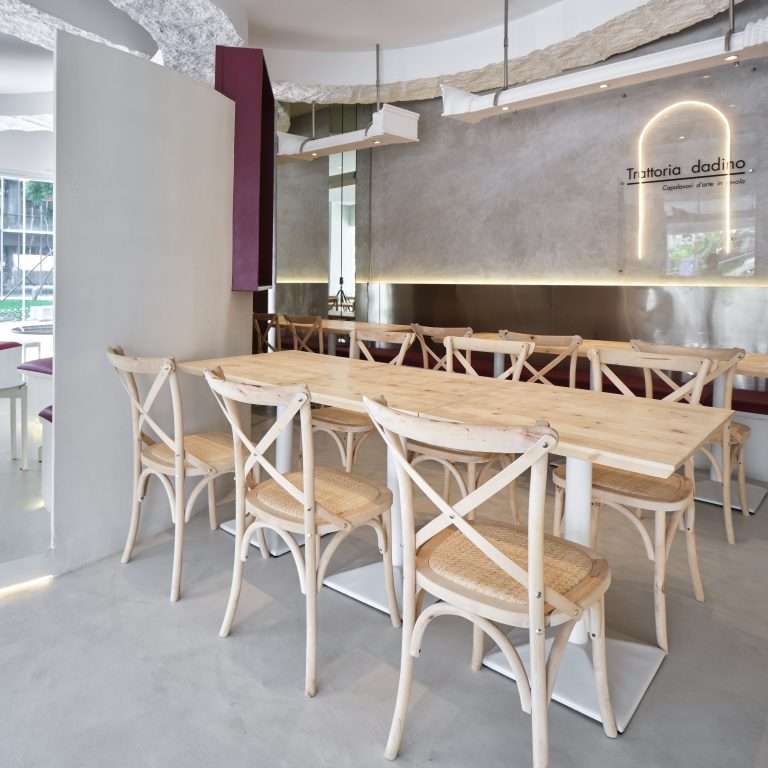


What is the visual difference between industrial and Scandinavian cafe furniture?
Industrial cafe design draws from the visual vocabulary of factories and warehouses: exposed black steel frames, reclaimed or distressed wood, Edison bulb lighting, concrete floors, and metal mesh or perforated steel elements. Furniture tends toward bold, geometric silhouettes with visible hardware—rivets, bolts, and welds as decorative details rather than things to be hidden.
Scandinavian (or Nordic) cafe design prioritizes functional simplicity, natural light, and organic warmth: light oak or beech wood, muted colour palettes (white, cream, dusty pink, sage green), clean lines without ornamentation, and a sense of deliberate calm. The furniture is often visually lighter—tapered legs, slimmer profiles, and upholstery in natural textures like wool or boucle.
Both are mature, well-understood aesthetic languages with extensive supplier ecosystems and strong consumer recognition. The choice between them is ultimately a brand alignment decision rather than a quality or cost decision—though there are meaningful cost differences at the specification level.
Who Each Aesthetic Attracts
Industrial aesthetics appeal strongly to specialty coffee culture, craft beer venues, urban professionals in their 20s and 30s, and creative industry clusters. The visual language communicates authenticity, craftsmanship, and a lack of corporate polish. It performs particularly well in converted industrial or heritage buildings where the aesthetic is architecturally reinforced.
Scandinavian aesthetics attract a broader demographic: families, remote workers, wellness-oriented consumers, and customers who prioritize comfort over novelty. The restraint of the style communicates reliability and quality. It’s the dominant aesthetic in third-wave coffee chains and suburban specialty cafés where approachability matters as much as differentiation.
Where there’s genuine brand ambiguity—a new concept without a fixed customer profile—Scandinavian tends to be the safer choice because it ages more gracefully and appeals to a wider demographic range. Industrial spaces can feel visually fatiguing after an hour, which limits their suitability for venues targeting long-dwell customers.
Material and Cost Differences
Industrial furniture is typically more expensive at the high end but accessible at the low end through mass-produced steel-frame knockoffs. Genuine contract-grade industrial furniture—fully welded steel frames, reclaimed timber tops, commercial-grade black powder coat—runs $80–$160 per chair and $150–$280 per table. The mid-market (stock items from commercial wholesalers) sits at $45–$80 per chair.
Scandinavian-influenced furniture has a wider cost range because the aesthetic encompasses both mass-market pieces and genuine Scandinavian manufacture. Solid beech chairs from Danish or Swedish workshops cost $200–$400 each; Vietnamese or Chinese contract-grade equivalents with similar profiles run $55–$95 FOB. The design language is more accessible to replicate without sacrificing visual coherence than industrial, where cheap imitations are immediately obvious.
Maintenance costs differ too. Industrial black powder-coat shows scratches less than lighter Scandinavian finishes; light oak or white-painted pieces show wear more visibly and may require touch-up or refinishing after 2–3 years of commercial use. Factor this into total cost of ownership calculations.
Mixing Elements: When It Works and When It Doesn’t
The strongest contemporary café interiors often blend elements from both traditions rather than applying one aesthetic dogmatically. Successful combinations include: Scandinavian chair profiles in industrial colorways (matte black powder-coat on a tapered-leg beech frame); industrial steel table bases with natural oak tops; and Scandinavian upholstery fabrics (textured wool, bouclé) on industrial-framed chairs.
The key principle is that one aesthetic should dominate (roughly 70%) while the other provides accent. Attempting a 50/50 blend typically reads as indecision rather than intentional design. Choose your primary aesthetic based on brand identity, then use the secondary for texture and visual interest.
Mixing fails most predictably when the scales are wrong (too many competing elements), when the quality levels are mismatched (high-end Scandinavian chairs next to cheap industrial shelving), or when the architectural shell contradicts the furniture (industrial furniture in a heritage Georgian dining room).
Practical Specification Guidance
For industrial specifications: prioritize weld quality (fully welded, not bolted at the joints), powder-coat thickness (60–80 microns minimum for scratch resistance), and reclaimed wood moisture content (below 10% to prevent warping). Avoid chair designs where the seat-to-frame connection relies on a single bolt—this is the first failure point under commercial use.
For Scandinavian specifications: prioritize kiln-dried solid wood over veneer for structural components, seat foam density of 1.8 lb/ft³ minimum, and finishes tested for resistance to common café cleaning agents including quaternary ammonium compounds and mild acidic cleaners. Upholstery with wool blends (50% wool minimum) offers good performance alongside natural appearance.
In both cases, request commercial warranty documentation. Reputable contract furniture suppliers provide 3–5 year structural warranties on seating and 2–3 years on finishes. Retail-grade furniture offers no such protection.
Conclusion
The choice between industrial and Scandinavian café furniture is fundamentally a brand identity decision supported by practical cost and maintenance considerations. Neither is inherently superior; both work well when specified correctly and aligned authentically with the venue concept.
View our full range of industrial and Scandinavian-inspired contract café furniture, with filtering by style, material, and minimum order quantity.
Frequently asked questions
Which is more expensive: industrial or Scandinavian cafe furniture?
High-end industrial (fully welded steel, reclaimed timber) costs $80–$160 per chair. Contract-grade Scandinavian style from Asian manufacturers runs $55–$95 FOB. Both categories have cheap imitations; quality differences are visible at the lower price points.
What powder coat thickness is required for industrial cafe furniture?
60–80 microns minimum for scratch resistance. Verify the phosphate or chrome conversion primer was applied before powder coating for long-term adhesion.
How do you blend industrial and Scandinavian in one cafe?
One aesthetic should dominate (roughly 70%) while the other provides accent. Common combinations: Scandinavian chair profiles in matte black colorways, industrial table bases with natural oak tops, or bouclé upholstery on steel-framed chairs.