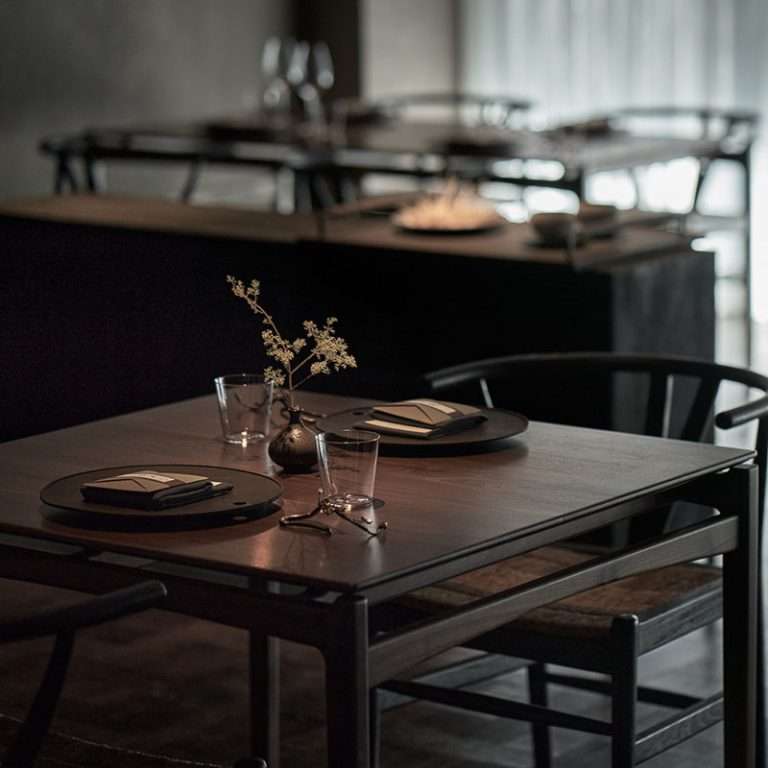


Why do retail chairs fail in restaurants within 12–18 months?
Restaurant environments are brutal on furniture. A busy 80-seat diner sees each chair used 200–300 times per week—that’s over 10,000 sit-cycles per year. Residential chairs are tested to roughly 25,000 cycles under controlled lab conditions; commercial chairs certified to BIFMA x5.4 standards must pass 250,000 cycles or more.
Retail chairs from general furniture stores typically use thinner-gauge steel tubes (0.8–1.0 mm wall thickness), particleboard seat cores, and decorative welds rather than structural ones. Within 12–18 months of commercial use, joints loosen, seat pads compress unevenly, and leg tips wear through—triggering expensive replacements and potential liability from wobbling chairs.
Contract-grade seating solves these problems at the design level, not through a label. Understanding what separates the two categories lets buyers make informed sourcing decisions rather than relying on marketing claims.
Which frame material lasts longest in commercial restaurant use?
Steel frames (18–20 gauge, 1.2–1.5 mm wall thickness) offer the best strength-to-cost ratio for high-turnover venues. Look for fully welded frames—not knock-down hardware—with cross-bracing at the seat rail junction. Powder-coated finishes resist scratches better than paint; ask suppliers for a 500-hour salt-spray test result if the chairs will be used near kitchen steam or outdoor areas.
Aluminum frames weigh 40–60% less than comparable steel, which matters in venues where staff constantly rearrange seating. Marine-grade 6061 aluminum alloy handles moisture exposure well, making it ideal for covered terraces and rooftop bars. The trade-off is cost: aluminum contract chairs typically run 20–35% more per unit than steel equivalents.
Solid hardwood (beech, oak, rubberwood) remains the aesthetic choice for upscale dining rooms and heritage café concepts. For commercial use, choose kiln-dried timber with moisture content below 8%, mortise-and-tenon joints reinforced with corner blocks, and a catalyzed lacquer or UV-cured finish that resists spills without frequent refinishing. Avoid finger-jointed wood sold as solid—it delaminates under repeated stress.
What seat foam and core specs should commercial chairs meet?
The seat core determines how long upholstered chairs remain presentable. High-density foam rated at 1.8 lb/ft³ minimum holds its shape through thousands of compression cycles; cheaper 1.2 lb/ft³ foam flattens visibly within 6–9 months. For venues with 90-minute average table turns, a 2.0 lb/ft³ foam with a 35 ILD (firmness) rating balances comfort against durability.
Seat base materials from best to worst: plywood (9-ply birch, 12 mm minimum), solid wood slats, medium-density fiberboard (MDF), and particleboard. MDF and particleboard are acceptable only in upholstered chairs where the foam and fabric carry most of the load—never for open-seat designs where the wood itself is structural.
Upholstery fabric should carry a minimum 50,000 double-rub Martindale or Wyzenbeek rating for commercial use. Contract-grade vinyl (polyurethane or genuine PVC-backed fabric) is easier to clean and more puncture-resistant than woven fabrics in casual dining environments. Request a cleaning protocol sheet from the supplier—some vinyl cracks under common quaternary ammonium disinfectants.
What stacking and linking specs matter for restaurant chairs?
Stackability is non-negotiable for venues that host private events or need flexible floor plans. Most contract side chairs stack 8–12 high safely; verify the rated stack height, not the maximum demonstrated height. Chairs stacked beyond their rated limit bow the back legs outward over time, creating instability.
Linking brackets allow rows of chairs to be secured together for conferences, banquets, and cinema-style seating. If your venue serves dual purposes (restaurant by day, event space by night), choose chairs that accept optional linking hardware as an add-on—retrofitting linking is rarely possible after purchase.
Glides and leg tips get overlooked during specification but cause significant floor damage and noise complaints. Felt glides work on hardwood and tile but saturate with grease in kitchen-adjacent areas. Stainless steel swivel glides are harder-wearing; hard rubber tips balance grip and scratch-resistance for most commercial floor types.
What are typical MOQ and lead times for factory-direct restaurant chairs?
Factory-direct suppliers typically require minimum order quantities of 20–50 chairs per style, with 30–60 day lead times from order confirmation. Domestic wholesalers can fulfill smaller orders (10–20 pieces) from stock, but at 25–40% higher per-unit cost. For new openings with fixed timelines, factor in a 2-week buffer for quality inspection and freight.
Total cost of ownership (TCO) is the right frame for purchasing decisions, not unit price. A $65 chair replaced every 2 years costs $195 over 6 years. A $120 contract chair lasting 7–10 years costs $120–$172 over the same window—while also reducing staff time spent on maintenance and customer complaints about wobbly seating.
Request samples before committing to large orders. Test them with actual staff weight, simulate stacking cycles, and check finish adhesion by running a coin across the frame. Suppliers who decline sample requests for orders over 50 units are a red flag.
Conclusion
Commercial restaurant chair selection comes down to matching frame strength, seat construction, and surface finishes to your specific service style and volume. Prioritize BIFMA-certified suppliers, request foam density specifications in writing, and calculate total cost of ownership rather than shopping on unit price alone.
For a full range of contract-grade seating suitable for restaurants, cafes, and hospitality venues, visit our restaurant furniture collection where you can filter by style, material, and MOQ.
Frequently asked questions
What BIFMA standard applies to commercial restaurant chairs?
BIFMA x5.4, requiring 250,000 sit-cycles minimum. High-intensity venues should specify 500,000-cycle tested chairs.
What is the minimum foam density for commercial restaurant seating?
1.8 lb/ft³ minimum; 2.0 lb/ft³ with 35 ILD firmness rating is recommended for venues with 90-minute average table turns.
How do I calculate total cost of ownership for restaurant chairs?
A $65 retail chair replaced every 2 years = $195 over 6 years. A $120 contract chair lasting 7–10 years = $120–$172 over the same period, plus lower staff maintenance time.
What is the safe stacking height for contract restaurant chairs?
Contract chairs are rated to stack 8–12 high. Always verify the rated stack height — not the maximum demonstrated height — to prevent leg bowing over time.